
Preservation
& open space.
Paradise Valley's identity is inseparable from its landscape. The community's commitment to preservation and open space is both a philosophy and a legal framework.
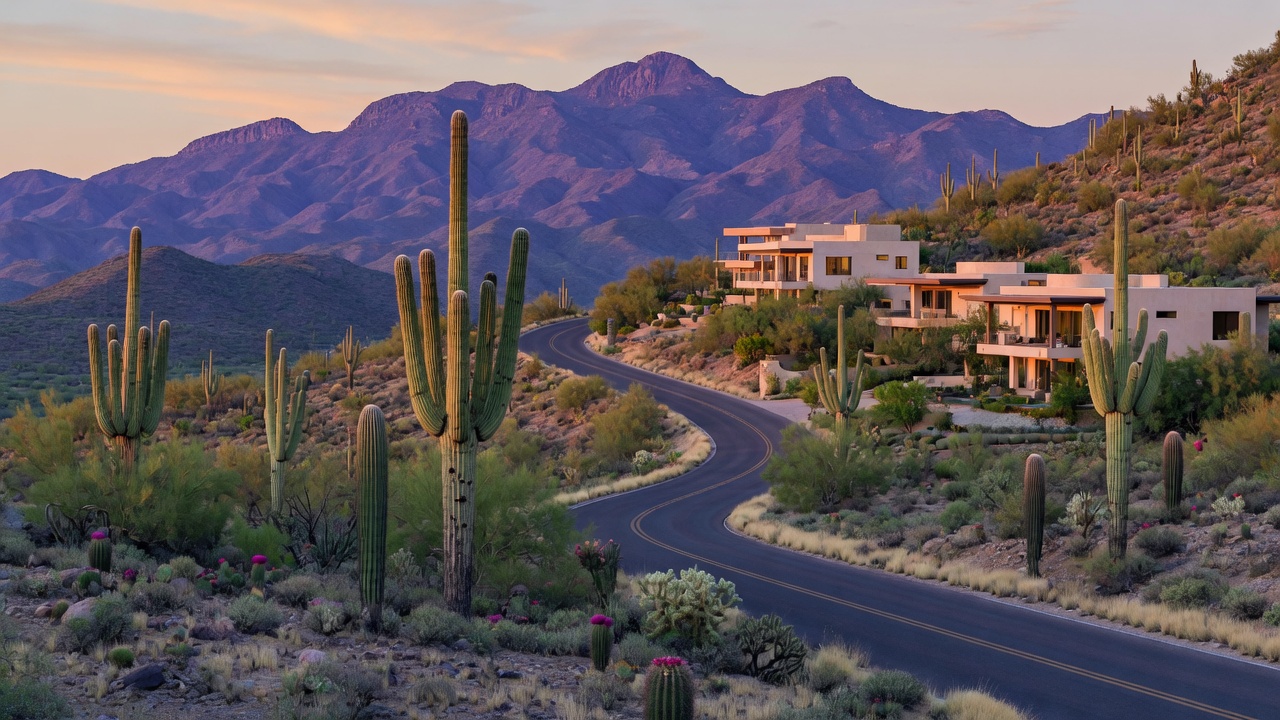
When Paradise Valley residents incorporated their town in 1961, they did so specifically to protect the desert landscape from commercial development and urban sprawl. That commitment endures.
The McDowell Sonoran Preserve
The McDowell Sonoran Preserve, located adjacent to Paradise Valley's eastern boundary, is one of the largest urban wilderness areas in the United States. Encompassing over 30,000 acres of pristine Sonoran desert, the preserve provides a permanent buffer of open space that defines the community's eastern horizon. The preserve's extensive trail system offers residents direct access to some of the finest desert hiking and mountain biking in the region.
Town zoning and land use
Paradise Valley's zoning laws are among the most restrictive in the greater Phoenix area. The one-acre minimum lot size ensures low density. The prohibition on commercial zoning prevents the intrusion of retail, office, or industrial uses into residential areas. And the absence of multi-family housing means that the town's population remains stable and its character preserved.
These protections are not accidental — they reflect the values of a community that chose, more than sixty years ago, to prioritize quality of life over commercial development. For homeowners, these protections also serve as a form of value preservation: the character and setting that make a Paradise Valley property desirable today will remain essentially unchanged in the future.
Wildlife and natural habitat
The Sonoran desert ecosystem within Paradise Valley supports a remarkable diversity of wildlife, including javelinas, roadrunners, Harris's hawks, Gila monsters, and numerous species of reptiles, birds, and mammals. The town's low density and natural landscaping create a habitat corridor that connects the McDowell Sonoran Preserve with the Phoenix Mountains Preserve and Camelback Mountain.
Homeowners in Paradise Valley share their landscape with this wildlife — a fact that many residents consider one of the community's greatest assets. Understanding and respecting this coexistence is part of living in Paradise Valley.
What this means for property owners
The preservation framework in Paradise Valley has direct implications for property owners. It ensures that the setting, views, and natural environment that define your property's value will be protected over time. It also means that development restrictions apply to your own property — modifications, additions, and new construction must comply with town zoning and building codes, which are among the most stringent in Arizona.
Lori Ross provides guidance on these requirements as part of every transaction, ensuring that buyers understand both the protections and the obligations that come with owning property in Paradise Valley.
Market overview · Neighborhood guide · Hillside properties · Lifestyle · Visit AZ Luxe Property
Own a piece of the desert.
Lori Ross can help you understand the preservation framework and find a property that aligns with your values.